
Out of Sight, Out of Mind: Why UK Homeowners Neglect Their Roofs
When was the last time you checked your roof?
If you’re like most UK homeowners, the honest answer is probably: not recently. And that’s completely understandable. Roofs sit high above us, quietly doing their job — until they suddenly aren’t.
The problem? By the time many people notice an issue, it’s already too late
The “Invisible” Part of the Home
Unlike a boiler, a broken window, or a leaking tap, roof issues don’t announce themselves straight away. A slipped tile, cracked ridge, or blocked gutter can sit unnoticed for months.
In the UK — where wind, rain, frost and moss are constant factors — roofs are under near-continuous stress. Yet regular inspections are rarely part of normal home maintenance.
According to housing condition data from the Office for National Statistics and wider property surveys, damp and structural issues remain among the most common housing problems reported in Britain. In many cases, the source traces back to roofing defects or water ingress that went unnoticed for too long.
Weather Damage Is More Common Than People Think
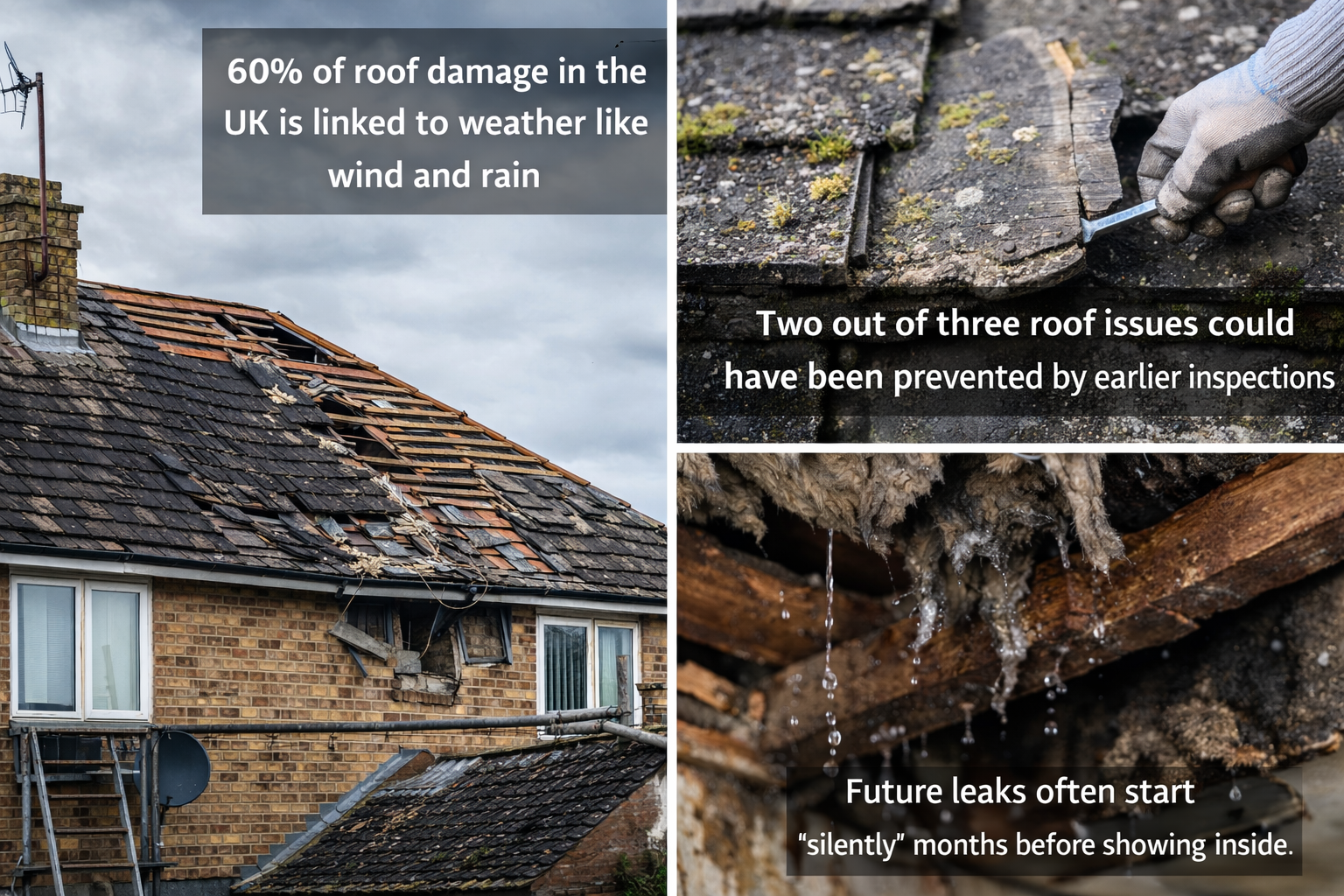
The UK experiences thousands of weather-related insurance claims each year. Storm damage alone costs insurers hundreds of millions of pounds annually.
The National House Building Council (NHBC), which provides warranties on new homes, consistently reports that weather-related damage — particularly from wind and rain — is one of the leading causes of roofing claims in newer properties.
That’s important.
Even newer roofs can develop problems within just a few years if small defects aren’t picked up early.
The Real Cost of Waiting
Here’s where neglect becomes expensive:
A slipped tile might cost under £200 to fix.
Left unchecked, that same issue can lead to:
Saturated felt
Rotten battens
Damp insulation
Ceiling damage
Mould growth
Suddenly, a minor repair becomes a £1,000–£5,000 job.
In worst-case scenarios, prolonged water ingress can compromise structural timbers — turning a routine fix into a partial roof replacement.
Most roofing professionals will tell you the same thing:
The majority of major roof repairs started as small, preventable issues.
Why Do People Put It Off?
There are a few common reasons:
“It looks fine from the ground.”
Many defects aren’t visible without a closer inspection.Fear of cost.
Ironically, avoiding a £150 repair often leads to a £2,000 bill later.No visible leak = no problem.
By the time water shows inside, damage has usually been developing for months.It feels non-urgent.
Roof maintenance doesn’t feel pressing… until it is.
How Often Should UK Roofs Be Checked?
Given our climate, most roofing professionals recommend:
A visual inspection once a year
A check after major storms
Regular gutter clearance, especially in autumn
Monitoring for moss build-up, particularly on north-facing roofs
Blocked gutters alone are one of the most common preventable causes of roofline damage in UK homes.
The Bigger Picture: Protecting Your Investment
For most people, their home is their biggest asset. Yet the part that protects it all — the roof — often receives the least attention.
Roof neglect isn’t usually deliberate. It’s simply human nature. If we can’t see something failing, we assume it’s fine.
But in the UK’s damp climate, small roofing issues don’t stay small for long.
Final Thought
Checking your roof isn’t about being paranoid.
It’s about being proactive.
Because in roofing, the pattern is almost always the same:
Minor issue → ignored → hidden damage → expensive repair.
And by the time it becomes obvious, it’s already cost more than it should have.
